Average Reviews:

(More customer reviews)Are you looking to buy Public Enemies, Public Heroes: Screening the Gangster from Little Caesar to Touch of Evil? Here is the right place to find the great deals. we can offer discounts of up to 90% on Public Enemies, Public Heroes: Screening the Gangster from Little Caesar to Touch of Evil. Check out the link below:
>> Click Here to See Compare Prices and Get the Best Offers
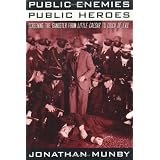
Public Enemies, Public Heroes: Screening the Gangster from Little Caesar to Touch of Evil ReviewThis is a very exciting book about why many people find gangster films appealing and why at the same time lots of institutions of authority have found them to be threatening, right from the very beginning. For example, it provides a detailed background of the gangster film's origins in the early '30s, exploring matters such as the motivations for Prohibition, anti-immigration movements, and what was taken to be "proper" American speech, in order to provide a sense of the feelings of resentment these films tapped into and why their early viewers were so excited by them.This sense of how gangster films have continually spoken for those otherwise ignored marks one of the book's most important themes. It also helps to provide an explanation of how the gangster film changed over the decades in response to attacks, both direct and indirect. The book describes and explains the gangster film's continual battles with various censors, within and without Hollywood, to show how these films continually evolved in ways that enabled them to cater again and again to those who would dissent with an oppressive status quo. Of especial interest is the chapter on German _film noir_ directors, which provides a very plausible account of why much _noir_ should be subsumed under the gangster genre. Dealing with the same issues of subversiveness and critical perspectives of existing power structures, much standard _film noir_ is more a continuation of the gangster film tradition than a break with it. Lots of other critics have noted this connection between these two types of films, but few have argued for it as forcefully, as clearly, or in as much detail as Munby. A tantalizing epilogue links these films to gangsta movies of the 1990s, a connection that one hopes will be worked out in more detail in the future.
Perhaps the most exciting thing about _Public Enemies, Public Heroes_, however, is that it explains how the violence and crime of gangster films appeals to us in ways that largely avoid the jargon-heavy vocabulary of much film studies scholarship today. The style, while dense, is not overlayed with extensive theoretical termimology. One can tell that Munby has reflected deeply on these matters and how to explain them to an audience that isn't necessarily a part of current theoretical discussions of film.
I would highly recommend this book to anyone who wished to understand better both the appeal of gangster films and what these films have typically reacted against. It shows that crime and violence, in narrative contexts, may be used to express in vivid and at times graphic detail objections to those things that order and structure our lives in oppressive ways.Public Enemies, Public Heroes: Screening the Gangster from Little Caesar to Touch of Evil OverviewIn this study of Hollywood gangster films, Jonathan Munby examines their controversial content and how it was subjected to continual moral and political censure.Beginning in the early 1930s, these films told compelling stories about ethnic urban lower-class desires to "make it" in an America dominated by Anglo-Saxon Protestant ideals and devastated by the Great Depression. By the late 1940s, however, their focus shifted to the problems of a culture maladjusting to a new peacetime sociopolitical order governed by corporate capitalism. The gangster no longer challenged the establishment; the issue was not "making it," but simply "making do."Combining film analysis with archival material from the Production Code Administration (Hollywood's self-censoring authority), Munby shows how the industry circumvented censure, and how its altered gangsters (influenced by European filmmakers) fueled the infamous inquisitions of Hollywood in the postwar '40s and '50s by the House Committee on Un-American Activities. Ultimately, this provocative study suggests that we rethink our ideas about crime and violence in depictions of Americans fighting against the status quo.
Want to learn more information about Public Enemies, Public Heroes: Screening the Gangster from Little Caesar to Touch of Evil?
>> Click Here to See All Customer Reviews & Ratings Now

0 comments:
Post a Comment